

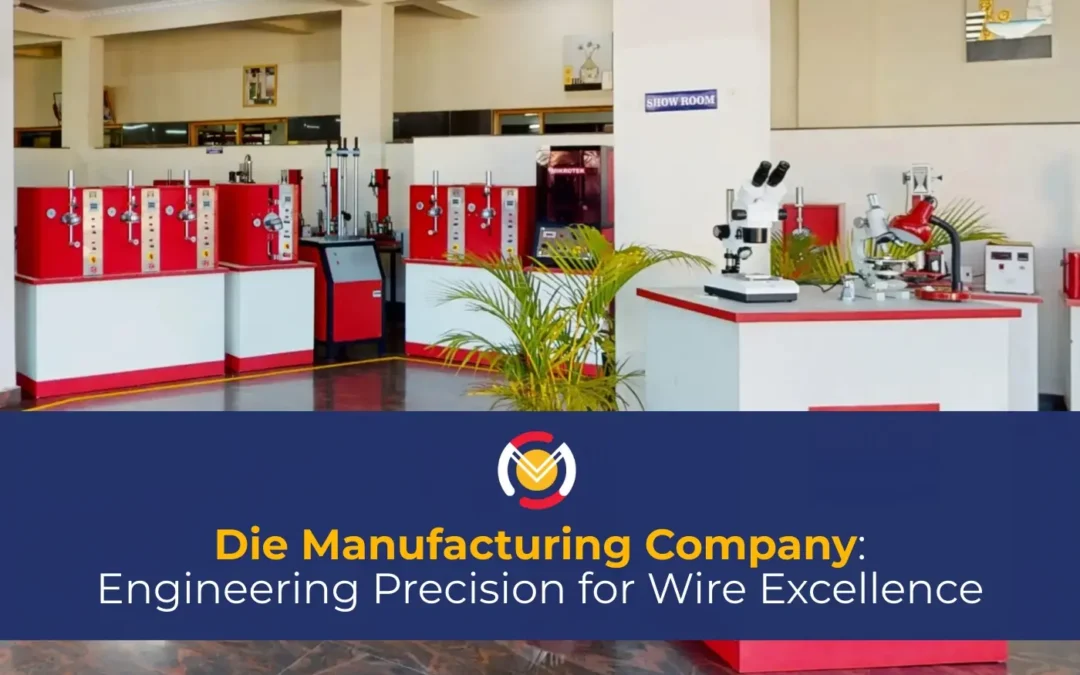
A die manufacturing company shapes wire accuracy, surface quality, and production stability at the tooling stage. Precision-engineered dies influence strength, conductivity, and consistency across wire applications. Choosing the right manufacturing company supports reliable output, controlled processes, and long-term efficiency in modern wire manufacturing.
Key Takeaways
• A die manufacturing company defines wire quality before production begins.
• An engineering discipline inside a manufacturing company drives consistency.
• Precision and innovation together support scalable wire manufacturing.
• The right manufacturing company becomes a long-term partner.
The choices made in wire manufacturing begin with the output expectations. The accuracy of diameter, surface finish, conductivity, and production consistency are all at the top of the list of requirements. It becomes apparent very early in this process that meeting these requirements is less about last-minute adjustments and more about the starting point established before any drawing even takes place.
The starting point is set by the wire-drawing die. The selection of the right manufacturing company has a great deal to do with the ability to meet these expectations and turn them into reality.
Why does wire excellence begin at a die manufacturing company?
Wire excellence begins at the die because the die defines wire shape, size, and surface from the first pass. Every downstream process relies on the accuracy established here. Precision at this stage sets the standard for the entire production run.
1. Control over wire geometry: Accurate die profiles ensure correct diameter and roundness. Geometry consistency supports predictable material flow during drawing.
2. Influence on surface quality: The surface finish affects wire smoothness. Clean finishes support insulation, coating, and final application performance.
3. Foundation for dimensional consistency: Early precision reduces variation across batches. Consistent dimensions lower rejection rates.
4. Impact on downstream processes: Stable wire output simplifies further processing. Assembly and performance reliability improve.
According to published research available on ScienceDirect, the wire-drawing process directly influences material deformation, surface finish, and electrical conductivity, making precision at the tooling stage critical for consistent wire performance.
What engineering trade-offs shape die performance in production?
Die performance is defined by engineering decisions that balance accuracy, durability, and operating conditions. These trade-offs influence how tooling behaves over extended production rather than during initial setup.
Engineering judgement determines sustainable performance.
1. Bearing length versus wear behaviour
Longer bearings stabilise wire flow but increase contact area. Design choices manage the rate of wear and long-term dimensional stability.
2. Surface finish versus friction levels
Smoother finishes reduce friction and surface damage. Excessive polishing, however, can alter contact behaviour under load.
3. Material selection considerations Tungsten carbide, PCD, and diamond dies respond differently to speed, lubrication, and wire material. Selection balances finish quality with usable life.
4. Alignment with production conditions
Tooling design reflects real drawing speeds and loads. Proper alignment reduces premature degradation during operation.
How does a die manufacturing company balance precision with manufacturability?
Precision must remain reliable throughout extended production cycles. Manufacturability ensures that accuracy holds under real operating conditions, such as load, speed, and continuous use. Balance allows precision to perform consistently on the shop floor rather than only on paper.
1. Durability under continuous operation: Materials used in dies must resist wear, heat, and deformation during long production runs. Strong durability helps a manufacturing company maintain dimensional accuracy even when production volumes increase.
2. Compatibility with existing systems: These are designed to integrate well with existing wire-drawing machines and systems. The more compatible these items are, the less time is spent on setup, and fewer adjustments are needed throughout the production process.
3. Ease of handling and maintenance: Practical die designs simplify handling, inspection, and routine maintenance. Ease of use helps operators manage tooling without disrupting production schedules.
4. Sustained accuracy over time: Precision must remain consistent beyond initial usage. It focuses on accuracy retention across repeated cycles and long-term operation.
Precision at the tooling stage directly influences performance outcomes such as strength and electrical conductivity in finished wires, making early manufacturing decisions critical.
How does process evidence support repeatable die manufacturing?
Repeatable die manufacturing depends on documented processes and measurable outcomes. Evidence-based control links design, inspection, and correction into a stable system. Process discipline sustains reliability.
1. Defined manufacturing workflows: Structured steps limit variation during production. Predictability improves consistency.
2. Inspection-linked feedback loops: Measurement results inform process adjustments. Feedback maintains accuracy.
3. Batch comparison and traceability: Each batch is evaluated against defined references. Traceability supports accountability.
4. Continuous correction mechanisms: Observed variation triggers corrective action. Stability improves over time.
How will the die manufacturing company adapt to changing wire applications?
Some applications change the wires used due to new products, new standards, or new performance expectations. There is a need for rapid change without compromising precision. This is what the development is. They support these shifts through engineering flexibility.
1. Support for varied wire materials: Tooling adapts to copper, alloys, and speciality materials with different drawing behaviors. Material-specific design helps maintain stable wire performance.
2. Accommodation of size variations: These are engineered to handle both fine wires and larger-diameter wires accurately. Flexibility allows manufacturers to serve diverse market needs.
3. Industry-specific understanding: Different industries impose unique tolerance and surface requirements. Understanding these demands guides more effective die design decisions. Application knowledge improves tooling relevance.
4. Scalable design approaches: Tooling designs support gradual increases in production volume. Scalability ensures precision remains consistent as demand grows.
Why is batch-to-batch consistency critical in a die manufacturing company?
Batch-to-batch consistency ensures predictable manufacturing outcomes across repeated orders. Variability disrupts efficiency, planning, and confidence. Reliability strengthens long-term partnerships.
1. Alignment across multiple orders: Each batch of dies closely matches previously defined specifications. Alignment reduces uncertainty and simplifies production planning.
2. Reduction in production adjustments: Stable dies require fewer machine adjustments during drawing. Reduced tuning saves time and improves throughput.
3. Confidence in long-term supply: Predictable tooling performance supports accurate forecasting and scheduling. Manufacturers can plan production with fewer risks. Confidence strengthens decision-making.
4. Strengthened supplier trust: Consistency builds trust between manufacturers and suppliers. Trust encourages deeper collaboration and long-term engagement. Strong relationships improve outcomes over time.
How does collaboration with a die manufacturing company improve results?
Collaboration aligns tooling design with real production requirements. Shared understanding improves decision-making and the relevance of tools. Clear communication leads to better manufacturing outcomes.
1. Application-focused discussions: Manufacturers share details such as wire material, speeds, and quality expectations. This understanding guides accurate die design.
2. Feedback-driven improvement: Operational feedback highlights performance trends and wear behavior. It uses this feedback to refine future tooling.
3. Shared performance goals: Both sides align on output quality, tolerance limits, and efficiency targets. Alignment helps focus engineering decisions.
4. Long-term partnership mindset: Collaboration deepens over time through repeated engagement. Long-term partnerships improve consistency and planning.
How does Mikrotek apply innovative precision in its die manufacturing?
Mikrotek operates as a precision-driven die manufacturing company focused on wire excellence. Mikrotek combines engineering discipline, controlled manufacturing, and practical innovation to deliver reliable dies.
The approach supports accuracy, consistency, and scalability across wire applications. Mikrotek’s focus remains on dependable outcomes and long-term manufacturing success.
Conclusion
Wire excellence develops from early tooling decisions. A die manufacturing company defines accuracy, consistency, and efficiency long before production scales. Precision supported by innovation creates stable outcomes across time. Choosing the right partner strengthens wire manufacturing from start to finish.
Connect with Mikrotek to explore precision die solutions designed for reliable wire performance.
FAQs
1. What role does a die manufacturing company play in the wire manufacturing process?
A die manufacturing company provides precision dies for wire size, geometry, and surface finish. Precision dies enable consistent wire production, performance, and quality for different wire materials.
2. Why is precision important when selecting a die manufacturing company?
Precision guarantees the wire satisfies size and performance specifications. Precision helps minimize variability, maximize yields, and ensure consistent wire production over extended manufacturing cycles.
3. How does a die manufacturing company support long-term production reliability?
It supports long-term reliability by delivering dies that maintain accuracy over repeated production cycles. Consistent design, controlled manufacturing, and stable performance help manufacturers plan production confidently and reduce disruptions over time.
4. How does a die manufacturing company facilitate innovation?
By means of sophisticated design techniques, processes, and continuous improvement. Effective innovation enhances the ability to repeat, adapt, and perform in a changing wire manufacturing environment.
5. What should manufacturers seek in a die manufacturing company?
Engineering expertise, process control, consistency, and application knowledge. A good manufacturing company helps facilitate efficient operations.
6. How does Mikrotek stand out ?
Mikrotek stands out through disciplined engineering, controlled manufacturing, and a focus on practical precision. Mikrotek supports wire excellence with consistent, application-driven solutions.
7. How does die material selection affect the performance of wire manufacturing?
Die material directly affects wear resistance, surface finish, and operational life. Materials like tungsten carbide or diamond are selected based on wire type and production conditions to ensure stable performance and extended usability.
8. What is the importance of surface finish in wire drawing dies?
Surface finish influences friction, heat generation, and final wire quality. A well-finished die helps achieve smoother wire surfaces, reduces defects, and supports better coating or insulation in later stages.
9. How does a die manufacturing company contribute to production efficiency?
By providing consistent and accurately engineered dies, it reduces machine adjustments, downtime, and material wastage. This leads to smoother operations and improved overall productivity in wire manufacturing.
10. Why is compatibility with existing systems important in die selection?
Compatibility ensures that dies integrate seamlessly with current machines and processes. This minimizes setup time, reduces operational disruptions, and allows manufacturers to maintain consistent production flow
