

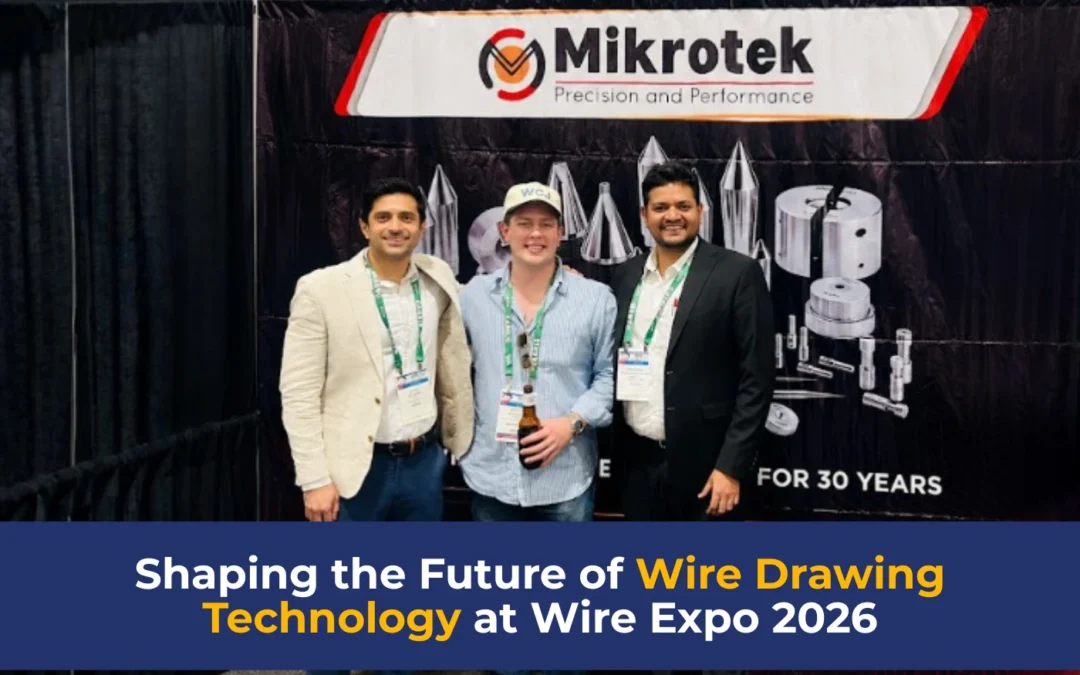
Wire Expo 2026 brought together some of the most forward-thinking minds in wire and cable manufacturing. Held on May 6 and 7 at the Baird Center, Milwaukee, USA, the event served as a global platform for manufacturers, engineers, and tooling specialists to explore the latest developments shaping the industry. Mikrotek attended the expo with a clear purpose, to connect with wire and cable manufacturers, understand evolving production challenges, and present precision tooling solutions built for higher efficiency and consistent wire quality. From high-speed drawing lines to fine wire applications, discussions at the expo made one thing clear: the demand for precision tooling has never been more critical.
Why Wire Expo 2026 Stood Out
Wire Expo 2026, organized by the Wire Association International (WAI), is one of the most respected gatherings in the wire and cable sector. The 2026 edition drew professionals from across North America, Europe, Asia, and beyond, creating a rich environment for knowledge exchange and business development.
The event covered a broad range of industry themes, including production efficiency, die wear reduction, dimensional accuracy in wire drawing, and the growing need for tooling solutions that can keep up with faster, more demanding production environments. Exhibitors and visitors alike came prepared with real-world challenges, making the conversations on the floor technical, practical, and results-driven.

Key Themes Driving the Wire and Cable Industry in 2026
Several clear priorities emerged across discussions and demonstrations at Wire Expo 2026:
- Higher Production Speeds Without Compromising Quality: Manufacturers are running faster lines than ever. The pressure to increase throughput while maintaining tight dimensional tolerances has pushed demand for high-performance tooling solutions that deliver long service life and consistent surface finish.
- Fine Wire Applications Demand Greater Precision: As electronics, medical devices, and EV components require increasingly fine wire gauges, the tolerance for die performance variation has shrunk. Single Crystal Diamond (SSCD) dies, and Polycrystalline Diamond (PCD) dies have become central to fine wire production strategies.
- Reducing Downtime Through Better Tooling: Unplanned die failure or inconsistent drawing performance leads to costly downtime. Industry professionals at the expo emphasized the growing preference for tooling partners who can offer both reliable product quality and responsive technical support.
- Sustainability in Manufacturing: Conversations around material efficiency and longer die life cycles pointed to a broader shift. Manufacturers are looking to reduce scrap rates, lower energy consumption per meter of wire drawn, and extend tooling intervals, all of which tie directly to die quality and application engineering.
Wire Drawing Die Technologies on Display
Wire Expo 2026 gave attendees a clear view of the full spectrum of die technologies currently available:
- Natural Diamond Dies (ND) remain a benchmark for fine wire drawing, particularly in applications where surface finish and bore geometry demand absolute precision.
- Polycrystalline Diamond Dies (PCD) offer exceptional wear resistance for medium and heavy wire drawing, making them a strong choice for high-volume production.
- Single Crystal Diamond Dies (SSCD) are gaining traction in ultra-fine wire drawing segments where bore consistency is critical.
- Tungsten Carbide Dies (TC) continue to serve as a reliable, cost-effective solution for general-purpose wire drawing across various alloys and wire sizes.
- Enamelling Dies support the magnet wire segment, where surface quality directly affects electrical performance.
- Stranding, Bunching, Compacting Dies, and Extrusion Tooling round out the full range of tooling requirements for cable manufacturing operations.
Understanding which die technology fits a specific application, wire material, drawing speed, and quality target is what separates productive tooling programs from those that generate unnecessary costs.
Mikrotek at Wire Expo 2026
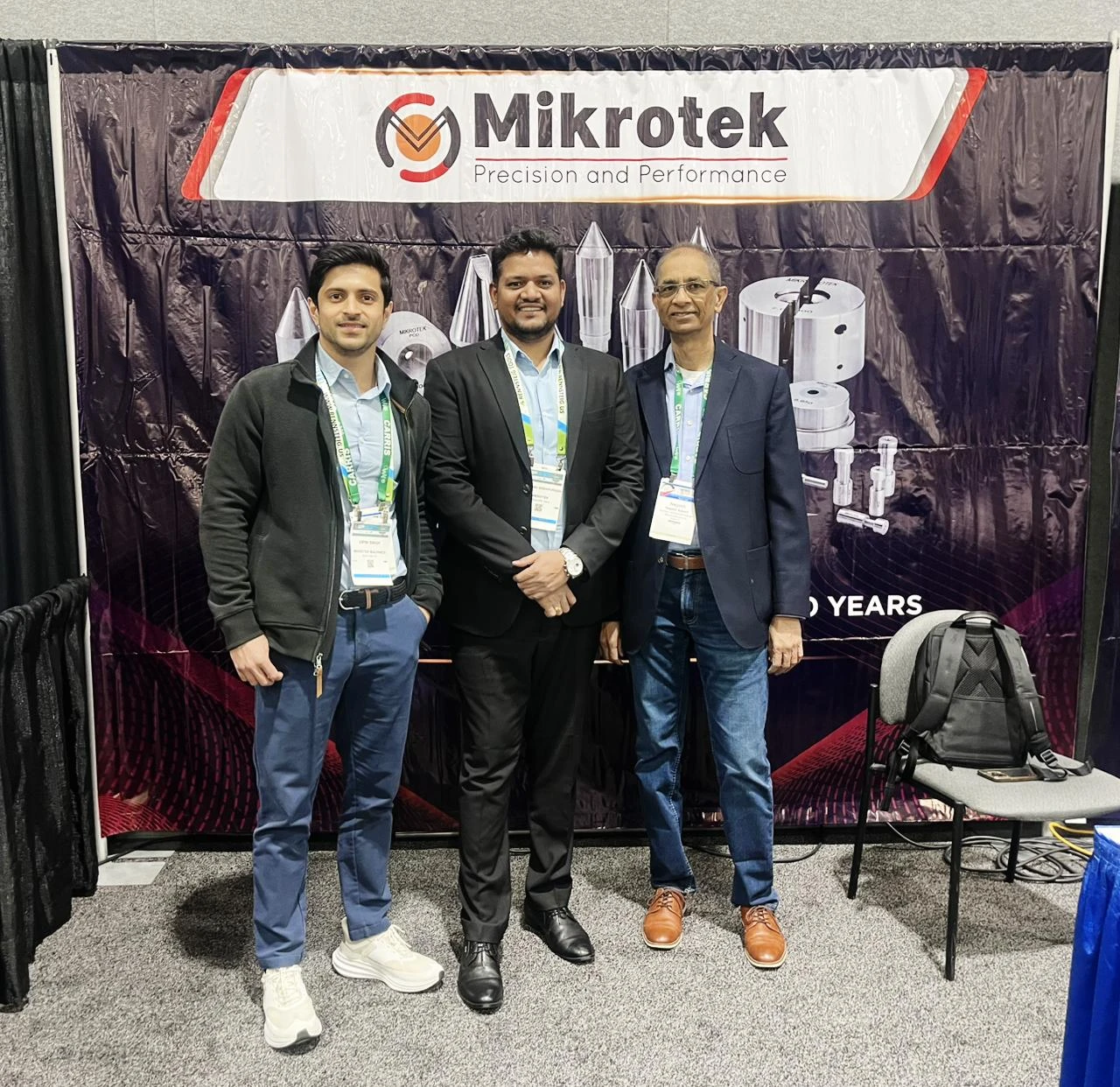
Mikrotek had a strong and engaging presence at Wire Expo 2026, connecting with wire and cable manufacturers, technical professionals, and business partners from global markets. The exhibition provided a meaningful opportunity to showcase a comprehensive range of precision tooling solutions and hold in-depth discussions with customers focused on production efficiency, wire quality, and tooling reliability.
The Mikrotek display included Natural Diamond Dies, Polycrystalline Diamond Dies, Single Crystal Diamond Dies, Tungsten Carbide Dies, Enamelling Dies, Stranding and Bunching Dies, Compacting Dies, and Extrusion Tooling Solutions. Each product category is engineered to address specific challenges in modern wire and cable production, including dimensional accuracy and surface finish, as well as die wear reduction and consistent drawing performance.
Visitor interest was strong across all product categories, with particular focus on tooling for high-speed production lines and fine wire applications. The engagement reinforced Mikrotek’s direction of combining manufacturing precision with application-based technical support.
Wire Expo was a rewarding experience for the Mikrotek team. The customer interactions, business conversations, and industry connections made across both days reflected the trust manufacturers place in precision tooling as a foundation of their production quality.

Looking Ahead: What Wire Manufacturers Should Focus On
Wire Expo 2026 made it evident that the industry is moving toward tighter quality benchmarks and higher production expectations simultaneously. For manufacturers looking to stay ahead, a few areas deserve attention:
- Tooling audits to assess current die performance against production targets
- Material-specific die selection to match wire alloy, drawing lubricant, and production speed.
- Preventive die maintenance programs to extend service life and reduce unplanned downtime.
- Engagement with tooling specialists who can support both standard and custom die requirements.
Choosing the right tooling partner goes beyond product quality. Technical knowledge, application experience, and service responsiveness all contribute to long-term production performance.
Conclusion
Wire Expo 2026 was a clear reflection of where the wire and cable industry is heading: faster production, tighter tolerances, and a sharper focus on tooling quality as a competitive differentiator. For manufacturers serious about consistent wire quality and efficient operations, the right die technology and the right tooling partner matter.
Explore Mikrotek’s range of precision wire drawing dies and tooling solutions to find the right fit for your production requirements.
FAQs
1. What is Wire Expo, and who organizes it?
Wire Expo is a leading trade exhibition for the wire and cable industry, organized by the Wire Association International (WAI). The 2026 edition was held on May 6 and 7 at the Baird Center, Milwaukee, USA.
2. What types of wire drawing dies are most commonly used in production?
The most common types include Tungsten Carbide Dies for general-purpose drawing, PCD Dies for high-volume and heavy wire applications, and Natural Diamond or SSCD Dies for fine and ultra-fine wire drawing.
3. How do I choose between PCD and Natural Diamond dies?
PCD dies offer greater wear resistance and are preferred for medium to heavy wire drawing at high volumes. Natural Diamond dies are better suited for fine wire applications where bore geometry and surface finish are the primary requirements.
4. What causes premature die wear in wire drawing?
Premature wear is often caused by improper die selection for the wire material, inadequate lubrication, misalignment in the drawing line, or using a die outside its recommended reduction range.
5. Can precision dies help reduce wire breakage during drawing?
Yes. Well-engineered dies with accurate bore geometry and smooth surface finish reduce friction, improve material flow, and lower the risk of wire breaks, especially in fine wire drawing applications.
6. What is the role of extrusion tooling in cable manufacturing?
Extrusion tooling controls the application of insulation or jacket material onto the conductor. Precision in tooling dimensions directly affects insulation concentricity, wall thickness consistency, and surface quality in the finished cable.
7. How often should wire drawing dies be inspected or replaced?
Inspection frequency depends on wire material, drawing speed, and production volume. A structured die maintenance and inspection program helps identify wear early and prevents quality issues from reaching the finished product.
8. Does Mikrotek offer custom tooling solutions?
Yes. Mikrotek engineers tooling solutions based on specific application requirements, covering custom die geometries, specialty materials, and technical consultation for both standard and high-performance wire drawing operations.
9. What wire materials are compatible with Mikrotek's precision dies?
Mikrotek’s dies support a wide range of wire materials, including copper, aluminum, steel, stainless steel, and specialty alloys, for both standard and high-performance wire-drawing applications.
10. How does die quality affect the final wire surface finish?
A well-engineered die with a smooth, accurately polished bore reduces friction during drawing, thereby improving surface finish, minimizing surface defects, and ensuring the wire meets end-use quality standards.
