

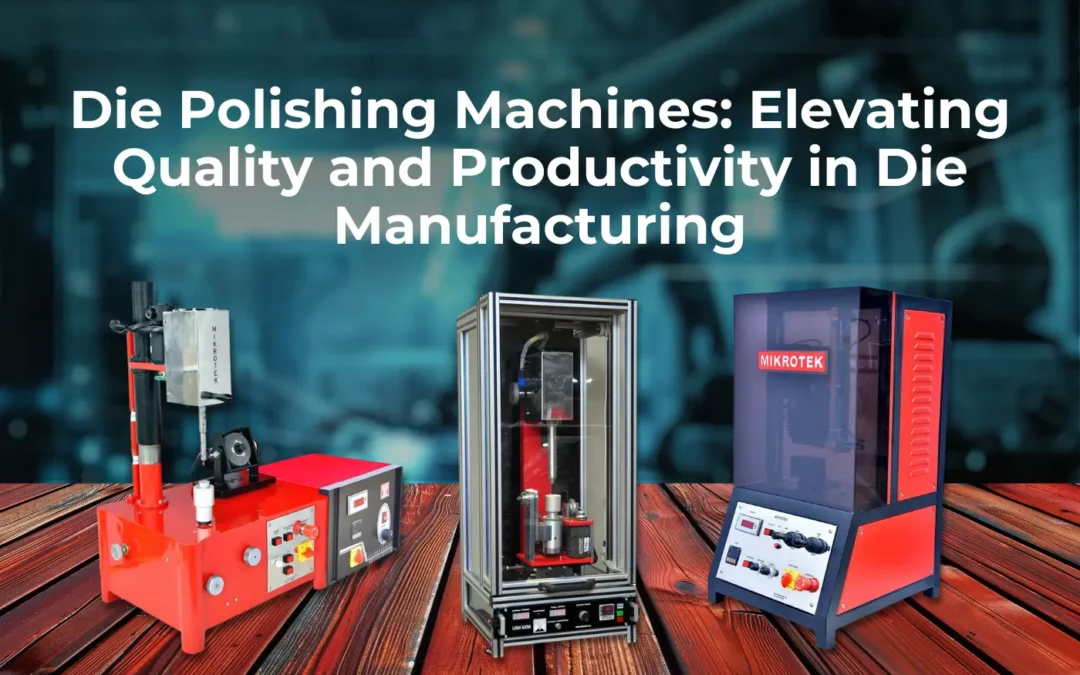
In the world of manufacturing, precision is paramount. Every millimeter and angle in a die counts, influencing the quality of the final product. Die polishing machines are essential tools that help achieve the perfect surface finish on dies, especially in industries where quality and accuracy are critical, such as automotive, aerospace, and electronics. These machines are designed not just to polish but to enhance surface quality, ensure accuracy, and improve productivity. In this blog, we’ll delve into what a die-polishing machine is, the importance of die-polishing, its working process, and how it benefits various sectors.
What is a Die Polishing Machine?
A die polishing machine is a specialized piece of equipment crafted to polish and smoothen the surfaces of dies. It is commonly used in processes like wire drawing and ejection. Its purpose is to make these surfaces uniformly flawless. Any surface imperfections, even the slightest, can impact the quality of the finished product, making the accuracy of die-polishing machines essential. These machines automate polishing, significantly reducing time and labor costs while delivering a superb surface finish.
The Importance of Die Polishing Machines
Die polishing machines are indispensable in industries where precise die quality is needed. Let’s explore some key reasons why these machines are so valuable:
- Quality and Consistency
Die polishing machines ensure that die surfaces are precise, resulting in superior quality products. This type of consistency plays a crucial role in industries such as automotive and electronics where consistency defines customer satisfaction.
- Extended Lifespan
Polishing a die with a die polishing machine minimizes surface defects, reducing wear and tear. It expands the lifespan of the die, reducing the replacement costs and cutting down production downtime. It means lower long-term costs and more reliable production.
- Increased Productivity and Efficiency
By automating the die-polishing process, these machines save significant labor time, increase production speed, and ensure that each die is polished to meet quality standards. It means fewer manual adjustments and a smoother production flow, allowing manufacturers to handle larger volumes without compromising quality.
- Enhanced Product Quality
Polished die contributes to more substantial, better-performing final products. For instance, in wire drawing, smooth dies help produce materials with fewer inconsistencies, resulting in durable, reliable products. By investing in a die polishing machine, companies invest in precision, efficiency, and quality—a combination essential for high-standard manufacturing.
How Die Polishing Machines Work
Die polishing machines are designed with advanced features that simplify the polishing process, enabling operators to achieve the desired finish quickly.
Let’s break down the steps of how a typical die-polishing machine operates:
Setup and Positioning
The operator securely positions the die within the machine, ensuring stability throughout polishing. Most modern die-polishing machines, such as the USBNG model, have adjustable fixtures that accommodate dies of different sizes and shapes. This feature allows for precise alignment, a critical factor in achieving uniform polishing results.
Polishing Process
Once the die is securely positioned, the machine begins the polishing process. Polishing materials are used to gently smooth and refine the die’s surface. Advanced die polishing machines, like the USBNG model with an inbuilt needle grinder and feedback ultrasonic generator, allow the operator to adjust settings such as speed and pressure. This customization ensures that the finish is tailored to the specific material and requirements of the die.
Inspection and Quality Control
After polishing, the die undergoes a thorough inspection to meet quality standards. Many modern die-polishing machines come with built-in inspection tools, such as magnification systems, that help operators verify the quality of the finish. This step ensures that every die meets the rigorous standards expected in high-precision industries.
Mikrotek's Diamond Die Polishing Equipment
Mikrotek understands the need for high-quality, reliable equipment in the die manufacturing industry. The diamond dies polishing equipment is designed to deliver exceptional results for polycrystalline, SSCD, and natural diamond dies. Here’s a closer look at the models:
USBNG Model
USBNG model features an inbuilt needle grinder, enabling operators to create accurate angles effortlessly and repeatedly. It also incorporates a feedback ultrasonic generator matched with a sandwich-type piezoelectric crystal head, ensuring continuous ultrasonic power for precise polishing. Combining the inbuilt needle grinder and ultrasonic feedback ensures that dies are polished with speed and accuracy, providing an ideal finish in the quickest way.
USMBT Model
The USMBT model has an external bench needle grinder for more versatility, offering flexibility in die-polishing setups. This model is perfect for manufacturers who need an external grinding option for specific polishing requirements.
Empowering Technicians with Expert Training
Die-polishing machines are crucial in several industries, enhancing production quality and efficiency.
Here’s a quick look at how they serve key sectors:
Automotive Industry
Precision and durability are essential in automotive components. Die polishing machines ensure that parts are manufactured to accurate specifications, contributing to vehicle safety, performance, and longevity.
Electronics Industry
In electronics, where even the smallest defect can impact functionality, polished dies are critical for producing reliable components. A smooth die surface reduces inconsistencies, enabling the production of high-quality parts.
Aerospace Industry
Aerospace components require extreme precision and quality. Die polishing machines contribute to this by ensuring that every part meets stringent standards, supporting the production of components that can withstand high-stress environments.
Conclusion:
Integrating Mikrotek’s die polishing machine transforms manufacturing by extending the die lifespan, improving product quality, and enhancing efficiency. Mikrotek’s solutions meet the high standards required in industries where accuracy is critical. Investing in our diamond die polishing equipment raises your production standards, ensuring excellence in every component. Discover Mikrotek’s solutions and elevate your manufacturing to new levels. Precision with economy lead the way with Mikrotek.
FAQs
What are solid enameling dies used for in wire manufacturing?
Solid enameling dies are used to apply a uniform enamel coating on wires, ensuring smooth surfaces and consistent insulation, which is essential for performance in electrical and industrial applications.
Why is uniform enamel coating important for wires?
Uniform coating prevents defects like pinholes and blisters, ensuring proper insulation, durability, and reliable performance in applications such as motors, transformers, and electronics.
What materials are commonly used in solid enameling dies?
Solid enameling dies are typically made from PCD, natural diamond, or tungsten carbide, each offering different levels of hardness, wear resistance, and cost efficiency based on application needs.
How does die geometry affect the enameling process?
Precise and mirror-polished die geometry ensures smooth enamel flow over the wire, helping achieve a consistent coating and preventing surface defects during production.
Can solid enameling dies be customized for different machines?
Yes, these dies can be customized to suit various machine setups, including vertical and horizontal coating systems, ensuring compatibility with different manufacturing processes.
What wire sizes can solid enameling dies handle?
They typically support a wire diameter range from 0.200 mm to 6.00 mm, making them suitable for a wide range of industrial applications.
Are solid enameling dies suitable for high-speed production?
Yes, they are designed for high-speed operations and can maintain coating quality even at higher production rates, supporting efficient manufacturing workflows.
How do reconditioning and repolishing extend die life?
Reconditioning restores the die’s surface finish and geometry, allowing it to maintain performance standards while reducing the need for frequent replacements.
Which industries rely on solid enameling dies the most?
Industries such as electronics, automotive, and telecommunications depend on these dies for producing insulated wires used in critical components and systems.
How do solid enameling dies support sustainable manufacturing?
Their durability and the availability of repolishing services reduce material waste and extend product lifecycle, contributing to more efficient and environmentally responsible manufacturing processes.
